Voicelogix AI Voice Agent Dashboard: Modern UI for Call Analytics
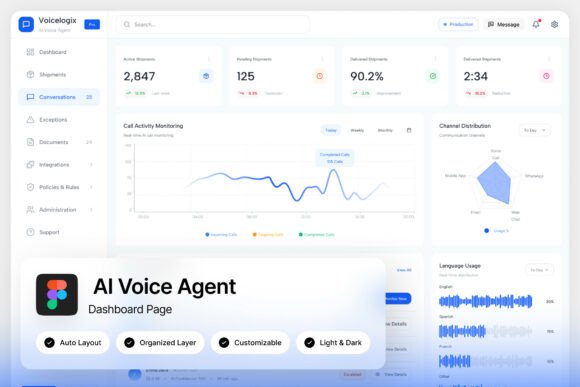
Imagine a command center where every customer conversation is not just heard, but visually mapped and analyzed in real time. The Voicelogix AI Voice Agent Dashboard brings this vision to life, offering a clean, light-themed interface designed for the future of voice AI and call center intelligence. This isn't just another admin panel; it's a sophisticated tool that transforms complex call data into clear, actionable insights, perfect for teams building the next generation of conversational AI.
At its core, this dashboard UI provides a comprehensive suite of features essential for modern contact centers. Designers and product teams will appreciate the thoughtful layout that includes detailed call analytics, agent performance metrics, and real-time transcription panels. The inclusion of dynamic conversation waveforms adds a visual dimension to audio data, making it easier to monitor calls at a glance. Campaign summaries round out the offering, giving a high-level view of outreach effectiveness. The pixel-perfect design and fully customizable layers in Figma mean you can adapt every element to match your brand's specific aesthetic, ensuring your internal tools are as polished as your customer-facing products.
Where This Dashboard UI Shines
The practical applications for a dashboard like Voicelogix extend across several key areas. For conversational AI startups, it provides an immediate, professional-grade interface to present to investors or early clients, demonstrating a commitment to quality and user experience from day one. Contact center tech teams can use it as a foundational design asset to build upon, saving countless hours of UI/UX groundwork. For SaaS UX designers, it serves as an excellent case study in information hierarchy and data visualization, showcasing how to present dense information without overwhelming the user.
Beyond direct use, the design principles here are highly instructive. The clean layout demonstrates effective font pairing and modern typography in action. Notice how the sans serif font choices likely prioritize readability for dense data sets, while potential display font accents could be used for headings or key metrics to draw attention. This thoughtful approach to typeface selection is crucial for maintaining visual consistency and strengthening brand identity, even within a technical product.
Tips for Integrating and Customizing
When working with a premium design asset like this, a few considerations will help you maximize its value. First, always review the included font links and test how the typefaces perform with your specific content. Check readability at different zoom levels, especially for the transcription panels. Second, consider the mood of your project. The light mode offers a crisp, professional feel ideal for most business applications, while the dark mode option can reduce eye strain during long monitoring sessions and convey a more modern, tech-forward vibe.
- Test Font Pairings: While the dashboard includes curated fonts, experiment with swapping in your brand's primary typeface for headings to maintain consistency across all your platforms.
- Leverage the Layers: The well-organized, named layers in the Figma file make it easy to isolate and edit components. This is perfect for creating derivative assets like social media graphics or internal presentation slides.
- Understand the License: Before finalizing any commercial use, verify that the included font licenses (linked in the provided .txt file) align with your project's distribution, whether for a single client, a SaaS product, or internal tools.
Choosing the right design assets is about more than just aesthetics; it's about efficiency and credibility. A well-crafted resource like the Voicelogix dashboard accelerates your workflow, ensures a high standard of visual communication, and ultimately helps your team present complex information with clarity and style. It’s a strategic investment in the professional presentation of your technology.